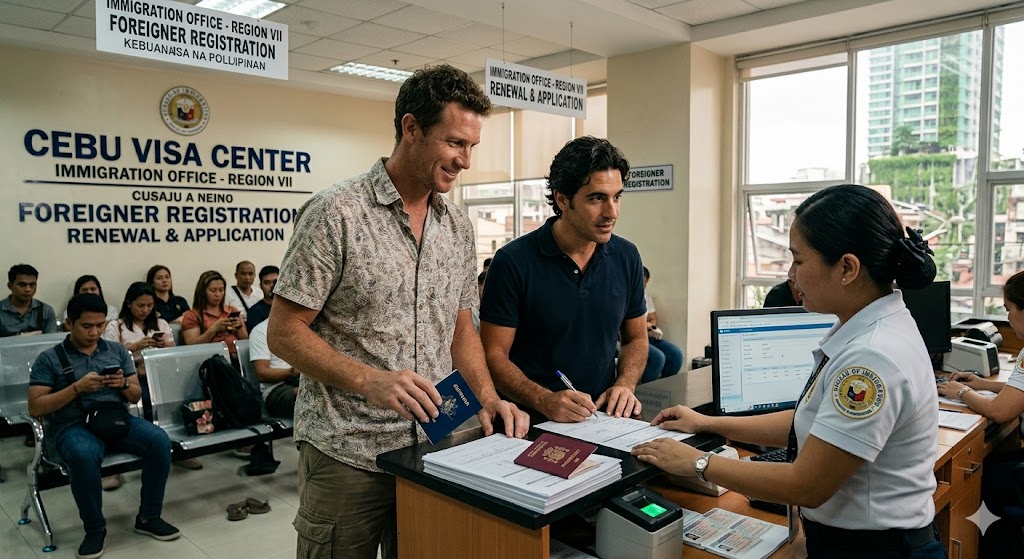
Buy Condo Cebu Foreigner: How to Purchase a Unit Legally in 2026
Key fact: When you decide to buy condo Cebu foreigner-friendly rules allow you to own up to 100% of a condo unit outright — the only restriction is a 40% cap on total foreign ownership per building. This guide walks you through the complete process for 2026.
Ready to buy condo Cebu as a foreigner? Whether you prefer to say “buy condo Cebu foreigner” or “purchase a unit as a foreign national,” the process is the same: You are not alone. Cebu has become one of Southeast Asia’s most appealing property markets, and the good news is that foreigners can legally own condo units in the Philippines. Understanding the rules, the process, and the numbers before you commit will save you money and stress. This guide covers everything you need to know in 2026 — from the legal framework to the best areas and what the process actually looks like step by step.
What the Law Actually Says: Can Foreigners Own Property in the Philippines?
The short answer is: yes — with one important boundary. Philippine law prohibits foreigners from owning land, but it explicitly allows condo ownership in the Philippines as a foreigner through the Condominium Act (Republic Act 4726). This makes buying a condominium unit the most straightforward path to property ownership in the country for any foreigner looking to buy condo in Cebu.
There is a single cap to be aware of: foreign nationals collectively cannot hold more than 40% of the total units in any one condominium building. In practice, well-located projects in Cebu fill that foreign allocation quickly, so moving early on a project you like is a smart strategy.
RA 12252: The 2025 Land Lease Update That Changes the Calculus
In September 2025, the Philippines enacted Republic Act 12252, extending the maximum term for land leases from 50 years to 99 years. While condo buyers own their unit outright (not a lease), this reform significantly improves the position of foreign investors who also lease land for residential or commercial use. It signals a clear policy shift toward welcoming long-term foreign investment — and it adds durability to the overall property market that supports condo values.
For a full breakdown of how the new Philippines property law affects foreigners, see our dedicated guide to RA 12252 and Philippines property law for foreigners.
For a deeper look at visa options that complement property ownership, the Philippine Retirement Authority is the official government resource for the Special Resident Retiree’s Visa (SRRV), which many condo buyers pursue alongside their purchase.
Step-by-Step: How to Buy Condo in Cebu as a Foreigner
Every foreigner who wants to buy condo in Cebu goes through the same legally defined process. Here is how it works, step by step. The buying process is more straightforward than most first-time buyers expect. Here is how it works from reservation to keys:
- Choose your unit and pay the reservation fee. Reservation fees typically range from PHP 20,000 to PHP 50,000 depending on the project. This takes the unit off the market while paperwork is prepared.
- Submit your required documents. You will need: a valid passport, a valid Philippine visa, and proof of funds — usually demonstrated through a foreign currency remittance record. Banks and developers require that purchase funds originate from abroad and be remitted in foreign currency to comply with Bangko Sentral ng Pilipinas (BSP) rules. When transferring purchase funds from abroad, services like Wise or Revolut offer competitive exchange rates and clear audit trails that satisfy BSP documentation requirements.
- Sign the Contract to Sell (CTS) or Deed of Absolute Sale. For pre-selling units, you will sign a Contract to Sell. For ready-for-occupancy (RFO) units purchased outright, you sign the Deed of Absolute Sale directly.
- Pay transfer taxes and fees. Expect to budget for Documentary Stamp Tax (1.5% of selling price), Transfer Tax (0.5–0.75%), registration fees, and notarial fees. Combined, these typically add 3–5% to the purchase price.
- Transfer of the Transfer Certificate of Title (TCT). The developer’s or your legal counsel’s team files with the Registry of Deeds. Processing takes four to eight weeks. Your name will appear on the Condominium Certificate of Title (CCT) — the condo-specific variant of the TCT — as the registered owner.
Working with a licensed local property specialist reduces errors and timelines. Get matched with a property specialist who works exclusively with foreign buyers in Cebu.
Costs for a Buy Condo Cebu Foreigner Transaction in 2026
Cebu’s condo market spans a wide price range, giving foreign buyers genuine options across different budgets.
- Budget / inland corridors: PHP 62,000–130,000 per sqm
- Mandaue average (Feb 2026): PHP 159,091 per sqm — the metropolitan midpoint
- Premium (Mandani Bay and comparable waterfront): PHP 226,800–242,000 per sqm
The sweet spot for most foreign buyers who want to buy condo in Cebu as a foreigner is PHP 2.5M to PHP 7M, which accounts for 62% of all pre-selling transactions in the Cebu market. In that range, you can secure a studio or one-bedroom unit in a well-located mid-tier project.
Pre-Selling vs. Ready for Occupancy
For a buy condo Cebu foreigner investor, pre-selling condos — units purchased before or during construction — are typically 15 to 50% cheaper than equivalent RFO units. The trade-off is a waiting period of one to four years for completion. For investors comfortable with that timeline, pre-selling is the highest-upside entry point in the market.
Best Areas in Cebu for Foreign Condo Buyers
Location drives both capital appreciation and rental performance. For any buy condo Cebu foreigner decision, these three corridors stand out in 2026:
IT Park (Lahug)
The central business district for Cebu’s BPO and technology sector. Annual capital appreciation runs 6–8%, the strongest in the city. Studio and one-bedroom units in IT Park command gross rental yields of 6–8%, underpinned by steady demand from young professionals and expat tenants.
Mandaue City
Mandaue is Cebu’s manufacturing and logistics hub and is increasingly popular with mid-market buyers. Average prices of PHP 159,091/sqm sit below the premium waterfront tier, with appreciation averaging 4–6% annually. Strong tenant demand from the industrial workforce keeps vacancy low.
Mandani Bay (Mandaue Waterfront)
The premium end of the Cebu market. Prices at PHP 226,800–242,000/sqm reflect the master-planned waterfront lifestyle. Suited for buyers prioritizing capital preservation and lifestyle value over yield maximization.
Why 2026 Is a Strong Entry Point for Foreign Condo Buyers
Several factors converge to make 2026 a compelling window for any buy condo Cebu foreigner decision:
- RA 12252 is law. The 99-year lease reform signals sustained government support for foreign participation in the property market — a structural shift, not a temporary incentive.
- Pre-selling inventory is active. Multiple projects in IT Park and Mandaue are currently in pre-selling phases, offering the 15–50% discount window before RFO pricing kicks in.
- Rental demand is structurally strong. Cebu’s BPO sector, medical tourism infrastructure, and growing expat population create durable tenant demand that supports the 5–8% gross yield profile.
- The peso exchange rate. For buyers holding USD, EUR, AUD, or GBP, current exchange rates extend purchasing power meaningfully compared to two years ago.
Visa Considerations for Buyers Who Plan to Live Here
If you intend to reside in the Philippines alongside your investment, the Special Resident Retiree’s Visa (SRRV) is worth exploring early. It offers indefinite stay, multiple-entry privileges, and exemption from exit clearance requirements. See our complete guide to retiring in Cebu on the SRRV visa for full details. Applications are processed through the Philippine Retirement Authority.
Ready to Take the Next Step?
The decision to buy condo in Cebu as a foreigner is legally simple, financially accessible, and strategically sound in 2026. The legal framework is clear, the process is defined, and the market fundamentals are strong. The main variable is acting before the 40% foreign ownership cap fills on the project you want.
Get matched with a property specialist who knows the Cebu market for foreign buyers, or start with our free Cebu expat guide to get oriented on the full picture — from property and visas to living costs and neighbourhoods.
Required Documents for Foreign Condo Buyers in the Philippines
Before completing a condo purchase in Cebu, foreign buyers must have the following documents ready. Missing any of these will delay or block the transaction:
- Valid passport with at least 6 months validity
- Valid Philippine visa (tourist, SRRV, working, or other long-stay visa)
- Tax Identification Number (TIN) — required by the Bureau of Internal Revenue for all property transactions. Apply via BIR Form 1904 or 1903. Without a TIN, the title transfer cannot be processed.
- Alien Certificate of Registration (ACR I-Card) — issued by the Bureau of Immigration for foreigners staying more than 59 days
- Proof of funds / source of funds — bank statements showing the purchase amount. Funds must be remitted from abroad via the banking system (not cash) to document the foreign currency source.
- Signed Deed of Absolute Sale (prepared by developer or seller’s lawyer)
Pro tip: Get your TIN before you start seriously negotiating. It can take 1–2 weeks to process and is a hard requirement — no TIN means no title transfer. If you use Wise or a similar service to transfer purchase funds from abroad, keep the transaction records as proof of foreign remittance for BIR compliance.
Transaction Costs: What Foreigners Actually Pay at Closing
The purchase price is only part of what you will spend. Budget an additional 4–6% of the property value for closing costs:
| Cost | Rate | Who Pays |
|---|---|---|
| Documentary Stamp Tax (DST) | 1.5% of property value | Buyer |
| Value Added Tax (VAT) | 12% (new condos sold within 5 years) | Buyer |
| Transfer Tax | 0.5%–0.75% of property value | Buyer |
| Registration Fees (Registry of Deeds) | ~0.25% of property value | Buyer |
| Capital Gains Tax (if resale) | 6% of selling price or zonal value | Seller |
| Real Estate Broker Commission | 3–5% | Seller (typically) |
Example: On a ₱5,000,000 condo unit, expect to pay approximately ₱275,000–₱350,000 in closing costs (DST + transfer tax + registration). VAT applies to brand-new developer units priced above a certain threshold — confirm with your developer whether VAT is included in the listed price.
Financing and Mortgage Options for Foreigners
Getting a mortgage in the Philippines as a foreigner is possible but more restrictive than for Filipino citizens:
- Down payment: Expect 30–40% (versus 10–20% for Filipinos)
- Interest rates: 7–10% per year on Philippine bank mortgages (higher than many Western markets)
- Loan term: Typically 5–20 years
- Eligibility: Banks require proof of income from a Philippine employer or a co-borrower who is a Filipino citizen
In practice, many foreign buyers use developer in-house financing (common on pre-selling condos) or pay in cash using funds remitted from abroad. Developer financing often offers 0% interest for 24–36 months on pre-selling units — a significant advantage over bank rates.
Alternative: Buying Through a Philippine Corporation
If you want to own land (not just a condo unit), one legal structure used by some foreign investors is purchasing through a Philippine corporation where Filipinos hold at least 60% of shares. This is legal but requires careful legal setup — a reputable Philippine lawyer is essential. Note: anti-dummy laws mean you cannot use Filipino nominees who hold shares entirely on your behalf. The Filipino shareholders must have genuine beneficial interest.
This approach is more complex and expensive to set up and maintain. For most expat retirees, simply purchasing a condo unit in your own name remains the simplest and safest path.
Frequently Asked Questions
Can a foreigner buy a condo in the Philippines?
Yes. Foreigners can legally own condominium units in the Philippines under the Condominium Act, provided foreign ownership in any single condominium building does not exceed 40% of total units. The foreigner receives full ownership through a Condominium Certificate of Title (CCT) registered in their name.
What documents does a foreigner need to buy a condo in Cebu?
Foreign condo buyers in Cebu need: a valid passport (minimum 6 months validity), a Philippine Tax Identification Number (TIN) obtained via BIR Form 1904, an Alien Certificate of Registration (ACR I-Card), and proof that purchase funds were remitted from abroad through official banking channels.
What is the 40% rule for condos in the Philippines?
Under the Philippine Condominium Act, foreign nationals can collectively own no more than 40% of the total units in any single condominium project. The remaining 60% must be owned by Filipino citizens or corporations that are at least 60% Filipino-owned. This limit applies per building, not per buyer.
How much does it cost to buy a condo in Cebu as a foreigner?
Beyond the purchase price, budget an additional 4–6% for closing costs: Documentary Stamp Tax (1.5%), Transfer Tax (0.5–0.75%), Registry of Deeds registration (~0.25%), and VAT (12%) on new developer units. On a ₱5,000,000 condo, expect approximately ₱275,000–₱350,000 in closing costs.
Leave a Reply to Can Foreigners Own Property in Cebu? Legal Guide 2026 Cancel reply