Retire in Cebu: The Complete SRRV Retirement Visa Guide for 2026
Retiring in Cebu is now open to foreigners aged 40 and older through the Special Resident Retiree’s Visa (SRRV), issued by the Philippine Retirement Authority. A USD $10,000 deposit secures permanent residency with full re-entry rights, condo ownership privileges, and a cost of living a Western pension can sustain comfortably. This guide covers everything for 2026, including the September 2025 rule changes.
What Is the SRRV and Who Issues It?
The SRRV — Special Resident Retiree’s Visa — is a long-stay retirement visa for foreigners who want to live in the Philippines indefinitely. It is administered exclusively by the Philippine Retirement Authority (PRA), a government body under the Department of Tourism.
Unlike a tourist visa, the SRRV is a multiple-entry, indefinite visa. It does not expire as long as you maintain your required deposit and comply with PRA conditions. Holders are exempt from re-entry permits, exit clearance requirements, and annual reporting fees that standard long-stay visa holders must manage.
Key SRRV Benefits at a Glance
- Permanent, non-expiring resident status in the Philippines
- Multiple-entry privileges with no exit clearance required
- Right to work or study in the Philippines
- Right to own a condominium unit (up to 40% of units in any building)
- Duty-free importation of personal effects (up to USD $7,000 on arrival)
- Access to special PRA member lanes at immigration
- Inclusion of spouse and dependents under one application
Who Can Now Retire in Cebu on an SRRV? Updated 2025 Rules
As of September 2025, the Philippine government lowered the qualifying age for the SRRV from 50 years old to 40 years old. This is one of the most significant changes to the program in a decade and directly benefits younger retirees, semi-retirees, and digital professionals considering a long-term move to Cebu.
Eligibility Requirements (2026)
- Age: 40 years and older (reduced from 50 as of September 2025)
- Nationality: Any foreign national (some restrictions apply for specific nationalities — confirm with PRA)
- Health: Medical clearance and no criminal record from country of origin
- Financial requirement: Minimum USD $10,000 deposit with proof of pension or retirement income
- Former Filipinos (Balikbayan): Reduced deposit of USD $1,500
If you are between 40 and 49, or you have active remote income and are not yet fully retired, also consider the Digital Nomad Visa (Executive Order 86, June 2025) — an alternative pathway designed for location-independent workers. A dedicated guide is coming to our Cebu expat guide page.
How to Apply for the SRRV: Step-by-Step
The SRRV application is processed entirely through the PRA. You can apply directly through pra.gov.ph, or — as most expats find more practical — through a licensed PRA-accredited agent. Working with an accredited agent reduces errors, speeds up processing, and ensures your deposit is placed correctly.
Application Steps
- Gather documents: Passport (valid 18+ months), birth certificate, police clearance, medical certificate, proof of pension or income, and passport-size photos.
- Open a PRA-accredited bank account and deposit the required USD amount (see costs below).
- Submit your application to the PRA office in Manila or through an accredited representative. A visa consultants directory page is coming to CebuExpat — we will list vetted, PRA-accredited professionals there.
- Attend the PRA interview (can be conducted at a Philippine embassy abroad in some cases).
- Receive your SRRV ID card and ACR I-Card (Alien Certificate of Registration Identity Card), which serve as your Philippine resident ID.
Total processing time is typically 4–8 weeks once all documents are in order. Visa consultant fees generally range from USD $500–$600 per application.
Full Cost Breakdown: What It Really Costs to Retire in Cebu on an SRRV
Budgeting correctly from the start prevents surprises. Below is a realistic cost map for a single applicant with a pension.
SRRV Application Costs
- Required deposit: USD $10,000 (with pension) — held in a PRA-accredited bank regulated by the Bangko Sentral ng Pilipinas, earns interest, and is refundable upon visa cancellation
- Former Filipino discount: USD $1,500 deposit only
- PRA application fee: Approximately USD $1,400 (includes visa fee, ACR I-Card, and processing)
- Visa consultant fee: USD $500–$600 (optional but strongly recommended)
- Medical exam and document authentication: USD $100–$300 depending on country of origin
Ongoing Living Costs in Cebu
- Modern 1-bedroom condo (Cebu IT Park / Lahug): PHP 20,000–45,000/month
- Comfortable monthly budget (single person): PHP 60,000–120,000 (approx. USD $1,050–$2,100)
- Private health insurance: USD $100–$300/month depending on age and coverage
- Annual PRA membership renewal: USD $360
When moving your retirement funds to the Philippines, using a low-fee international transfer service helps you retain more of your money. Services like Wise or Revolut are widely used by expats to transfer money to the Philippines with mid-market exchange rates and transparent fees — particularly useful when making your initial PRA deposit or monthly fund transfers.
Why Cebu Is the Smart Choice for Retirement in the Philippines
Manila is congested. Davao is remote for most international arrivals. Cebu strikes a balance that few cities in Southeast Asia can match — it offers genuine city infrastructure, an international airport with direct routes to Japan, South Korea, Singapore, and the Middle East, and a surrounding archipelago of beach and island destinations within 30 minutes by boat.
Property Ownership Rights for SRRV Holders
SRRV holders can legally own a condominium unit in the Philippines. The restriction is that foreign nationals may collectively own no more than 40% of the units in any single building. In practice, this means condo ownership is broadly accessible in Cebu’s primary development corridors: Cebu IT Park, Cebu Business Park, Lahug, Mactan, and Mandaue.
A significant legal update under Republic Act 12252 (September 2025) extended land lease terms for foreigners from 50 years to 99 years. While SRRV holders cannot own land outright, a 99-year lease now provides a generation-spanning level of security for retirees who want to build on or develop leased land. Read our full guide to Philippines property law for foreigners under RA 12252 for a detailed breakdown of how this affects your property options.
Investment Returns: Cebu Rental Yields
Many expats who retire in Cebu choose to generate passive income by renting out their condo when abroad or during transition periods. Cebu’s rental market is strong:
- Overall average yield: 5–8% annually
- Studio units: 6–8% yield (highest performers)
- Sweet-spot purchase price: PHP 2.5M–7M (this range accounts for 62% of pre-selling transactions in Cebu)
Pre-selling condos in this price band offer the best combination of capital appreciation potential and rental demand. If you are also planning to buy a condo when you retire in Cebu, see our complete guide on how foreigners buy a condo in Cebu — it covers the legal framework, step-by-step process, and 2026 pricing.
How to Start Your Retirement in Cebu: Practical Next Steps
Deciding to retire in Cebu is easier when you break it into stages. Most successful expat relocations follow this sequence:
- Research visit (1–2 weeks): Spend time in Cebu IT Park, Lahug, and Mactan Island to identify your preferred neighbourhood before committing.
- Engage a PRA-accredited visa consultant: Begin document preparation 3–6 months before your target move date.
- Open a Philippine bank account: BDO, BPI, and Metrobank all have PRA-designated branches for deposit placement.
- Transfer your initial funds: Use a rate-efficient service to transfer money to the Philippines for your deposit and first months of living costs.
- Secure accommodation: Short-term furnished rentals are widely available in Cebu IT Park while your condo purchase or long-term lease is finalised.
- Engage a relocation specialist: International moving companies with Philippines experience can manage your household goods shipment and customs clearance, saving significant time and stress.
If you want personalized relocation advice tailored to your specific situation — visa pathway, neighbourhood selection, and property strategy — start your Cebu journey with our free expat guide. We cover everything from PRA contacts to the best neighbourhoods for retirees aged 40+.
Retire in Cebu: The Verdict for 2026
The SRRV remains the gold standard for foreigners who want a stable, legally secure base in the Philippines. The September 2025 reforms — lowering the eligibility age to 40, extending land leases to 99 years under RA 12252, and launching the Digital Nomad Visa — have made 2026 one of the most favourable years in a generation to retire in Cebu. With strong rental yields, a growing expat community, and property at accessible price points, Cebu offers a retirement proposition that few destinations in Asia can match.
Ready to take the next step? Schedule a free consultation with our full expat guide, or explore our full guide to buying a condo in Cebu as a foreigner.
How Much Does It Cost to Retire in Cebu? Monthly Budget Breakdown
One of the most common questions expats ask is: what does retirement in Cebu actually cost? The answer depends on your lifestyle, but here are realistic monthly budget ranges based on current 2026 data:
| Lifestyle | Monthly Cost (PHP) | Monthly Cost (USD approx.) |
|---|---|---|
| Modest (local-style living) | ₱50,000–₱75,000 | $870–$1,300 |
| Comfortable (mid-range expat) | ₱90,000–₱130,000 | $1,570–$2,260 |
| Upscale (premium condo + lifestyle) | ₱180,000–₱280,000 | $3,130–$4,870 |
Key monthly expenses to budget for:
- Condo rent (1BR, IT Park/Business Park): ₱25,000–₱55,000/month
- Electricity: ₱8,000–₱15,000/month (air conditioning is the main cost in tropical Cebu)
- Groceries: ₱15,000–₱30,000/month (mix of local markets and imported goods)
- Healthcare: ₱2,000–₱5,000/month (doctor consultations: ₱600–₱3,000 per visit)
- Transport: ₱5,000–₱12,000/month (Grab, taxis, or a motorcycle)
- Dining out: ₱8,000–₱20,000/month
Compared to the United States, United Kingdom, or Australia, Cebu offers a quality of life that would cost 3–4x more in your home country. The Philippine peso’s purchasing power makes a significant difference for dollar- or pound-denominated pension or investment income.
Best Neighborhoods in Cebu for Expat Retirees
Where you live in Cebu dramatically affects your daily experience. Here are the top five neighborhoods expat retirees choose in 2026:
Cebu Business Park (Ayala Area)
The most polished and walkable district in Cebu. Home to Ayala Center Mall, top restaurants, international clinics, and a dense network of condominiums. Premium price — expect ₱30,000–₱55,000/month for a 1BR — but everything is within walking distance. Best for retirees who want a city lifestyle without driving.
IT Park and Lahug
The tech and expat hub of Cebu. Modern condominiums, 24-hour restaurants, gyms, and co-working spaces fill this area. Slightly more affordable than Business Park — 1BR condos run ₱22,000–₱40,000/month. Strong expat community and English widely spoken.
Banilad
A quieter, leafy residential area north of the city. Popular with families and retirees who prefer a slower pace. Mix of houses and condominiums. ₱18,000–₱35,000/month for a comfortable unit. Close to international schools and Robinsons Galleria mall.
Mactan (Lapu-Lapu City)
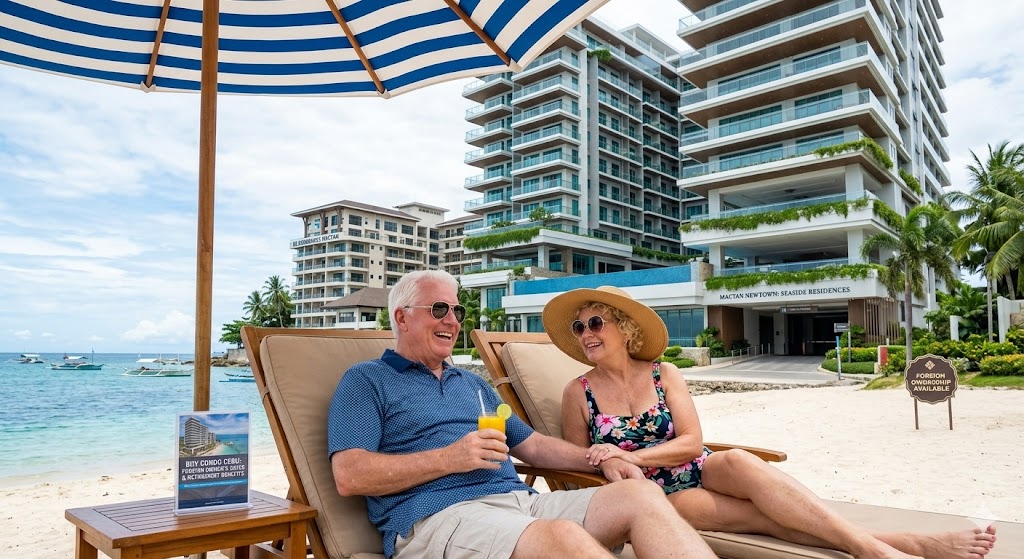
Home to Cebu’s international airport and beachfront resorts. More suburban feel, great for retirees who want beach access. Mactan Newtown development has modern condominiums and amenities. Slightly longer commute to Cebu City but the lifestyle trade-off is worth it for many.
South Road Properties (SRP)
The newest district in Cebu — a reclaimed land development with modern infrastructure. SM Seaside Mall anchors this area. Growing quickly with new condo developments. More affordable than established areas and well-planned for the future.
Healthcare for Retirees in Cebu
Access to quality healthcare is a top priority for retirees, and Cebu delivers. The city has some of the best medical facilities in the Philippines outside of Manila.
Top hospitals:
- Chong Hua Hospital — consistently ranked the top hospital in Cebu, with specialist departments across all major fields. Most expats and doctors refer serious cases here.
- Cebu Doctors’ University Hospital — large teaching hospital with broad specialist coverage
- Perpetual Succour Hospital — well-regarded for cardiac and emergency care
- Vicente Sotto Memorial Medical Center — government hospital with trauma center
Specialist consultations cost ₱600–₱3,000 per visit. Private health insurance for expats in the Philippines typically runs $150–$400/month depending on age and coverage. Many retirees from the USA on Medicare note that Medicare does not cover international care — a separate international health policy is essential.
Visa Options Beyond SRRV: What Else Can You Use?
The SRRV is the most popular path, but it is not the only visa option for retiring in Cebu. Here is a quick comparison:
| Visa Type | Best For | Key Requirement | Duration |
|---|---|---|---|
| SRRV (Special Retiree) | Long-term retirees aged 40+ | $1,500–$10,000 deposit | Indefinite, renewable |
| 9A Tourist Visa | Testing the waters first | Return ticket, clean record | 30 days + extensions up to 36 months |
| Digital Nomad Visa (EO 86) | Remote workers aged 18+ | $24,000/year foreign income | 12 months, renewable |
| 13A Marriage Visa | Married to a Filipino citizen | Valid marriage certificate | 1 year initial, then indefinite |
For most retirees planning to stay permanently, the SRRV remains the gold standard. It allows multiple-entry/exit, exemption from customs duties on personal effects, and does not require annual renewal visits to immigration. Read our complete SRRV application guide for step-by-step instructions.
Frequently Asked Questions: Retiring in Cebu
Can I retire in Cebu on $1,500 a month?
Yes — a modest but comfortable lifestyle is achievable at $1,500/month (approximately ₱86,000 at current rates). You would rent in a mid-range condo outside the premium districts, cook at home regularly, and use local transport. Many retirees live well on this budget.
Do I need to speak Filipino (Tagalog) to live in Cebu?
No. Cebu’s local language is Cebuano (Bisaya), but English is widely spoken across Cebu and is an official language in the Philippines. Business, healthcare, legal, and everyday service interactions are all conducted comfortably in English.
Is Cebu safe for foreign retirees?
Cebu City and its major expat areas (IT Park, Business Park, Mactan Newtown) are considered safe for daily life. Standard urban precautions apply — be aware of your surroundings, avoid displaying valuables. Crime rates in expat-dense areas are comparable to any mid-sized Asian city.
How long does the SRRV application process take?
The SRRV application typically takes 4 to 8 weeks from the date of complete document submission to the Philippine Retirement Authority (PRA). Processing time varies depending on whether you apply directly at the PRA Manila office or through an accredited representative, and how quickly your home-country documents (police clearance, birth certificate) can be authenticated. Budget a minimum of 3 months end-to-end if you are coordinating authentication from abroad. Applicants who use a PRA-accredited visa consultant generally report faster turnaround due to document pre-screening.
Can I bring my pension income to the Philippines tax-free?
Foreign-sourced income (pensions, social security, investment returns from abroad) is generally not subject to Philippine income tax for non-resident aliens, per Bureau of Internal Revenue guidelines — though consulting a Philippine tax advisor for your specific situation is always recommended. SRRV holders specifically enjoy favorable tax treatment. Always consult a Philippine tax advisor for your specific situation.