Expat Life in Cebu: What to Expect Your First 30 Days
Expat life in Cebu is genuinely good — affordable, English-speaking, well-connected, and with a tight community of foreigners who’ve already figured out what you’re about to learn. Most expats land, find an apartment in IT Park within a week, get a SIM card the same day, and are more or less functional within two weeks. The first 30 days are a mix of logistics, small culture shocks, and discovering that Cebu is considerably easier to land in than most of Southeast Asia. This checklist covers everything you need to handle in your first 30 days of expat life cebu residents consistently recommend as the highest priority tasks.
Planning your move to Cebu? Talk to our team — we work with foreigners at every stage of relocation, from first visit to long-term residency and property.
Week 1: Landing, SIM Card, and Getting Oriented
Your first week is pure logistics. The good news: Cebu is forgiving. English is spoken everywhere — at the airport, in every mall, at the bank, with your Grab driver. You will not need a translator for a single interaction in your first 30 days. This is the detail that consistently surprises expats who moved from Thailand or Vietnam: in Cebu, everything just works in English.
Day one priorities, in order:
- SIM card: Get a Globe or Smart prepaid SIM at Mactan-Cebu International Airport arrivals or at any SM, Ayala, or Robinsons mall. Globe has slightly better LTE coverage in the IT Park area. A prepaid load of ₱300–₱500 will last your first week. Do not buy a postpaid plan until you have a local address confirmed.
- Grab app: Download and register before you leave the airport. Grab is your primary transport for the entire first month — possibly longer. A Grab from Mactan Airport to IT Park costs ₱300–₱500 and takes 25–60 minutes depending on traffic. There is no need to negotiate with taxi drivers.
- Short-term accommodation: Most expats use Airbnb or a serviced apartment for the first 2–3 weeks while they search for a long-term rental. IT Park and Cebu Business Park have several options at ₱1,800–₱3,500/night.
On traffic: Cebu traffic is real and it will frustrate you. The main routes — from Mactan to IT Park, along Osmena Boulevard, around SM City North — can turn a 3-kilometre trip into 45 minutes during rush hour (7–9am, 5–7:30pm). The adjustment is not about distance; it is about learning to stop measuring time in kilometres and start measuring it in traffic reality. Most long-term expats simply schedule around it.
Week 2: Finding Your Apartment and Getting Connected

The majority of newly arrived expats end up in IT Park — a modern, walkable district in Lahug with 24-hour convenience stores, gyms, coffee shops, pharmacies, and a cluster of condominiums purpose-built for the international market. It is the right place to start, even if you eventually move elsewhere.
Typical IT Park studio apartments rent for ₱25,000–₱35,000 per month (approximately $440–$620). One-bedroom units run ₱30,000–₱50,000. Leases are typically 6 or 12 months with one to two months’ advance and one to two months’ security deposit upfront. Most buildings accept foreigners with a valid passport — no local credit history required.
IT Park vs. Cebu Business Park vs. Lahug: Which Should You Pick?
| Area | Typical Studio Rent | Vibe | Best For |
|---|---|---|---|
| IT Park | ₱25,000–₱35,000 | Modern, walkable, lively evenings | First arrival, remote workers, socialising |
| Cebu Business Park (Ayala) | ₱28,000–₱40,000 | More polished, less dense, malls nearby | Couples, quieter pace |
| Lahug / Banilad | ₱18,000–₱28,000 | Residential, green, less traffic | Longer-term stays, families |
| Mandaue / Talamban | ₱25,000–₱32,000 | Local feel, less expat infrastructure | Budget-conscious, longer stay |
Once you have an address, apply for fiber internet immediately — PLDT Fibr or Converge ICT both offer 100Mbps plans at around ₱1,500–₱1,699/month. Both have 1–2 week installation lead times. Do not wait. Order on the day you sign your lease. In the interim, your Globe or Smart SIM data plan (₱799–₱999/month for unlimited data) will carry you.
Banking and Money in Your First Month
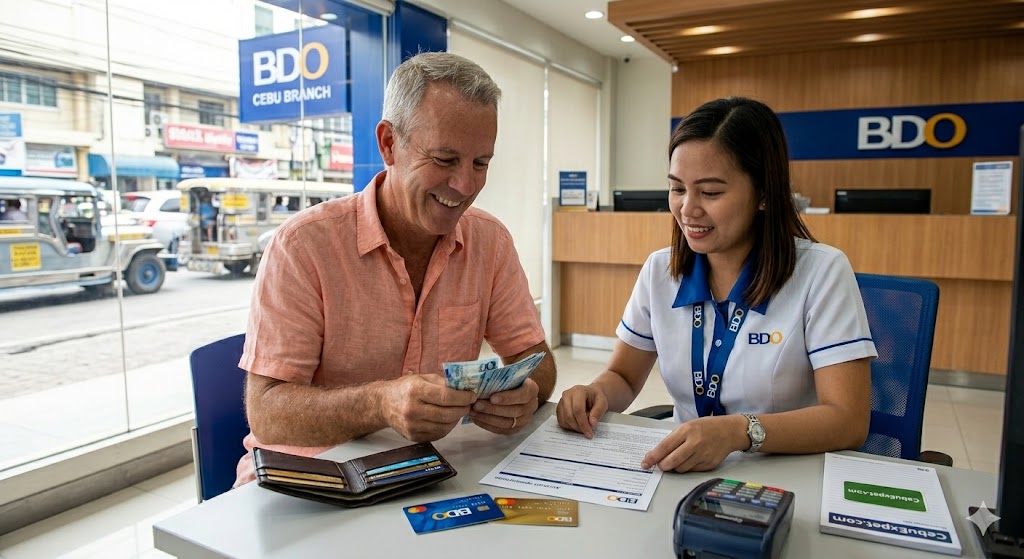
Opening a Philippine bank account as a foreigner is straightforward if you know which banks to approach. BDO (Banco de Oro), BPI (Bank of the Philippine Islands), and Metrobank all accept foreigners who are still on a tourist visa. You will typically need your passport, a secondary ID (driver’s licence works), proof of address in Cebu (a lease agreement or hotel booking letter), and a minimum initial deposit of ₱500–₱5,000 depending on the account type.
BDO Amore Savings is the most commonly recommended starting account among the expat community — low maintaining balance, full online banking, and ATM cards issued same-day or within 3–5 business days. BPI is slightly more conservative on documentation but has excellent online banking infrastructure.
For transferring money into the Philippines from overseas: use Wise or Revolut rather than a traditional bank wire. Bank wires from the US, UK, or Australia to a Philippine bank account typically cost 3–5% in total (hidden exchange rate markup plus fees). Wise and Revolut use the mid-market exchange rate with transparent flat fees, typically 0.5–1.5%. On a $2,000 monthly transfer, that saves $50–$70 per month — real money over a year.
If you plan to buy property in Cebu at any point, you will need a Tax Identification Number (TIN) — specifically a BIR Form 1904 (one-time taxpayer registration). This is a separate process from banking. See our full guide: How Foreigners Get a TIN in Cebu.
Finding the Expat Community in Cebu
The Cebu expat community is real, active, and easy to plug into. The primary entry point is the “Expats in Cebu” Facebook group — search for it and request to join before you land. It has tens of thousands of members and generates daily posts covering accommodation, visa questions, restaurant recommendations, and general first-timer questions. Nobody there will make you feel like an idiot for asking basic questions.
Weekly in-person meetups happen regularly in IT Park. These are informal — coffee or drinks at one of the restaurants on the IT Park strip — and the crowd ranges from retirees to remote workers to people a month into their first visit. It is the fastest way to get real information from people who have already made the mistakes you are about to make.
The evening social scene in IT Park is centred around the restaurants and bars on the IT Park loop and at Suba Mercado, a food market-style venue nearby. This is where a lot of the informal community life happens — not a nightlife scene, more like a neighbourhood gathering. For a broader food and drink scene, Ayala Center Cebu has everything from casual local restaurants to proper steakhouses.
One thing that surprises almost every new expat: how quickly Cebu starts to feel like home. The combination of English everywhere, a functional expat network, walkable infrastructure in IT Park, and genuine friendliness from locals closes the adjustment period faster than most people expect coming from Thailand or Indonesia.
What Will Surprise You: Honest Adjustments
Every expat who has lived in Cebu for more than three months says a version of the same thing: the first two weeks felt hard, then it clicked. Here is what they mean specifically:
The noise
Roosters do not observe the concept of sunrise-only crowing. If your apartment is near any residential area (even in the middle of a city), you will hear roosters. You will also hear karaoke — a deeply embedded part of Philippine social culture — from neighbouring units or nearby homes. Most expats adapt within two weeks. Earplugs help for the first month.
Service pace
Philippine service culture operates at a different clock than most Western countries. A restaurant order can take 20 minutes. A bank transaction that should take 5 minutes takes 25. A delivery arrives whenever. This is not incompetence — it is a different relationship with time and customer interaction. Expats who push against it are consistently unhappy. Expats who adjust to it are consistently fine. Patience is not optional; it is a practical skill you will develop in your first 30 days whether you intend to or not.
Traffic as a given, not a surprise
The traffic adjustment is less emotional than the service pace adjustment. Once you accept that travel time is unpredictable between 7–9am and 5–7:30pm, you plan around it: early morning appointments, afternoon errands, dinner after 7pm when it clears. Grab makes this manageable — you are not the one driving, and you are not hunting for parking.
The heat
Cebu averages 27–33°C year-round with high humidity. The first two weeks in the heat are the hardest. After that, most expats adapt — or they adopt the Filipino approach, which is to move between air-conditioned spaces as much as possible. Your electricity bill will be higher than you expected. Budget ₱3,000–₱7,000/month for electricity in a one-bedroom unit with regular AC use.
Healthcare, Groceries, and Daily Essentials
For healthcare: Chong Hua Hospital (Fuente Osmena area) and Cebu Doctors’ University Hospital (Osmena Boulevard) are the two main expat-preferred hospitals. Both have internationally trained staff, English-speaking doctors across all specialties, and clean, modern facilities. A GP consultation costs ₱500–₱1,500 ($9–$26). A specialist runs ₱1,500–₱3,000. Do not leave for Cebu without travel or health insurance — even if you are young and healthy, one hospital admission without coverage is expensive by Philippine standards (and inexpensive by your home country standards, but still not free).
For groceries: SM Supermarket (multiple locations, including SM City Cebu and SM Seaside) is the most convenient for expats — full range of local and imported products, consistent stock, and clear pricing. Ayala Center Cebu has a well-stocked supermarket with more imported Western goods. S&R Membership Shopping in Mandaue is the Costco equivalent — bulk buying, imported food and household goods, large portions. Most expats get S&R membership within their first month. Annual fee is around ₱700 for an individual membership.
For eating out on a budget: turo-turo eateries (point-and-choose Filipino food counters) serve full meals for ₱60–₱120. You will find these on almost every street. A mid-range restaurant meal runs ₱250–₱500 per person. The IT Park strip has options at every price point from ₱150 rice meals to ₱800 steaks.
Weeks 3–4: Getting Settled, Getting Legal, Planning Ahead
By week three, the logistics are mostly handled. Your apartment is sorted, your SIM is working, your bank account is open or in progress, and you have at least a rough sense of your neighbourhood. Now is when you turn attention to the medium-term questions.
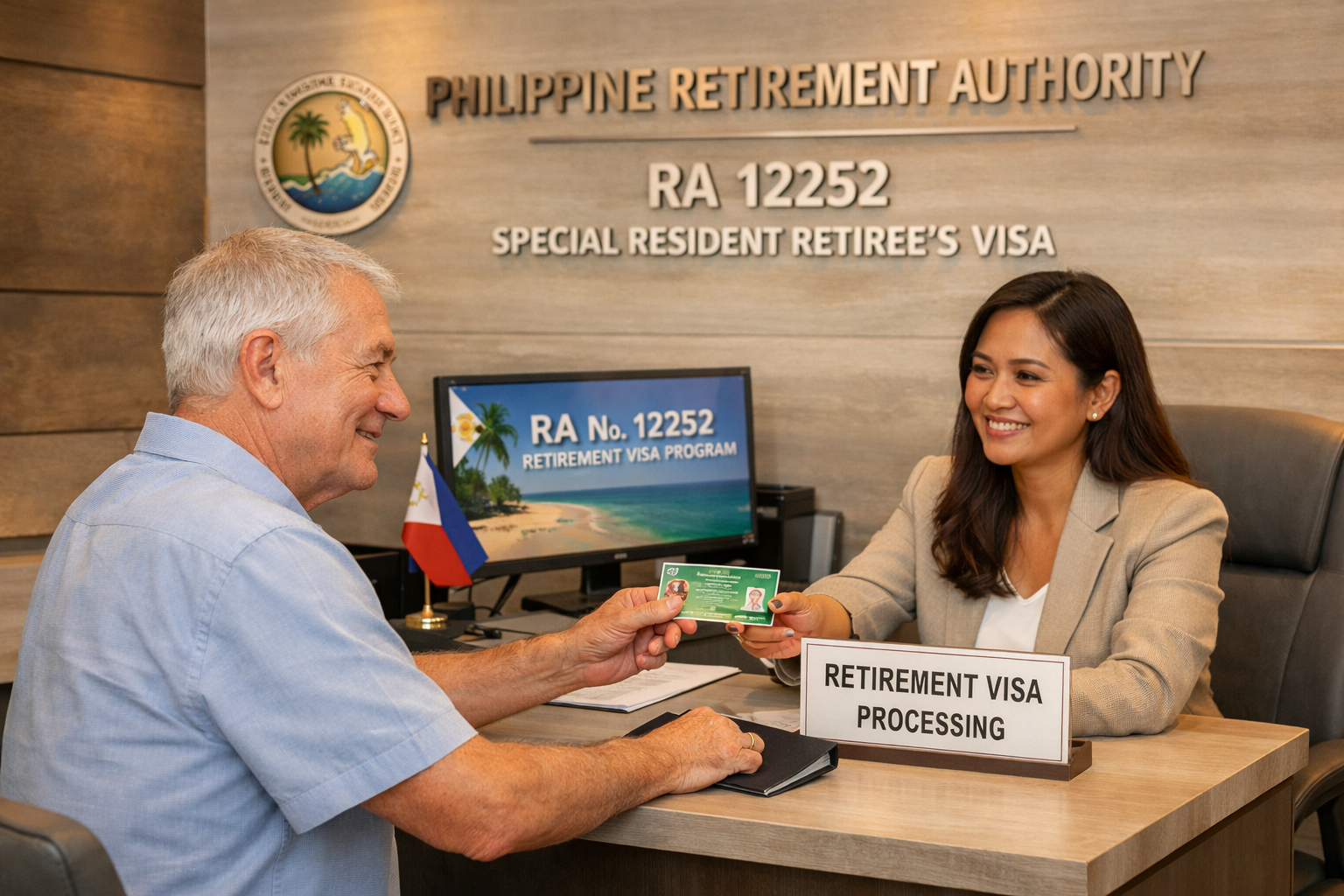
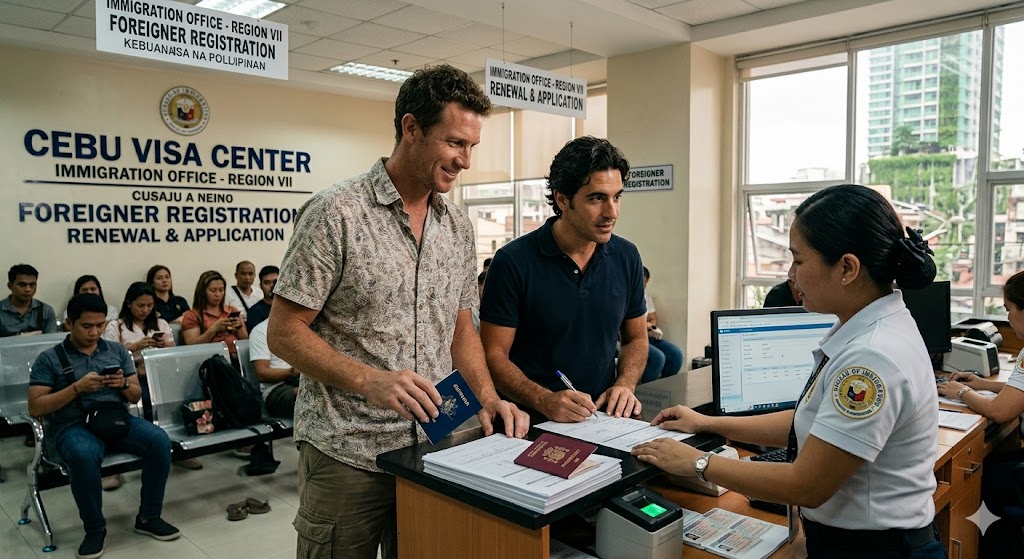
Visa: Most expats enter on a tourist visa (30 days on arrival for most Western nationalities). You can extend at the Bureau of Immigration office in Cebu for up to 36 months total. Extensions cost approximately ₱3,500–₱5,500 per month and can be done in person or through an agency. If you are planning to stay longer than six months, start researching the SRRV (Special Resident Retiree’s Visa) or other long-term options. See our full Retire in Cebu guide for visa pathways.
Property: If you are considering buying, the first 30 days are the right time to start educating yourself — not necessarily to buy, but to understand what is available and what the rules are. Foreigners can legally own condominium units (up to 40% of a building’s units can be foreign-owned). Land ownership has different rules. Our guide on how foreigners buy property in Cebu covers the full legal framework. On cost, our cost of living breakdown gives you a full picture of what your monthly budget looks like once you are settled.
Community: By week four, most expats have found their rhythm — a favourite coffee shop, a regular Grab route, a couple of people from the Facebook meetups they have grabbed a drink with. Cebu rewards people who engage with it. The expat community is not just for socialising; the most useful relocation advice comes from people who arrived six months before you did.
Frequently Asked Questions: Expat Life in Cebu
Is Cebu a good place to live for expats?
Yes, consistently. Cebu combines affordability (comfortable lifestyle from $1,200–$1,800/month for a single person), English as the working language everywhere, a well-established expat community centred around IT Park, strong hospital infrastructure, and a location that gives you easy access to some of the best islands and dive sites in the Philippines. Expats from the US, UK, Australia, and Europe regularly cite it as a better quality-of-life choice than Manila, and more practically functional than smaller Philippine cities like Dumaguete or Siargao.
How long does it take to settle into expat life in Cebu?
Most expats feel oriented within two weeks and genuinely settled within 30–45 days. The biggest milestones: getting a SIM card (day 1), finding an apartment (days 5–14), opening a bank account (week 2), and connecting with the expat community (ongoing from week 1). The cultural adjustments — traffic, service pace, noise — take two to four weeks to normalise. After six months, most expats describe Cebu as genuinely comfortable rather than just manageable.
What is the best area for expats to live in Cebu?
IT Park (Lahug) is the default starting point for almost every newly arrived expat, and for good reason: walkable, modern, surrounded by cafes and restaurants, and close to the main expat social scene. After a few months, many expats move to Banilad, Talamban, or Mandaue for more space at lower cost. Some choose Mactan Island for beach access. Very few expats who stay longer than a year regret starting in IT Park — it gives you a base from which to explore the rest of the metro before committing to a neighbourhood.
How do I get a SIM card in Cebu as a foreigner?
Get a Globe or Smart prepaid SIM at Mactan Airport arrivals, or at any SM, Ayala, or Robinsons mall in Cebu City. You need your passport. SIM registration is mandatory in the Philippines — you register via the carrier’s app or SMS verification system. It takes about 10 minutes. Prepaid load costs ₱300–₱500/week for casual use; a monthly unlimited data plan costs ₱799–₱999. Get Globe if you will be based in IT Park — their LTE coverage in that area is strong.
Can I open a bank account in Cebu as a tourist?
Yes. BDO, BPI, and Metrobank all accept foreigners on tourist visas. You need your passport, a secondary ID, and proof of address in Cebu (a lease agreement or hotel letter works). BDO’s Amore Savings account is the most commonly recommended — low maintaining balance, full online banking, and ATM card issued quickly. Plan for 30–60 minutes at the branch. Bring all documents and expect to wait. Most branches near IT Park are used to handling foreign applicants.
Do I need a car in Cebu during my first month?
No. Grab covers virtually every route you will need in your first 30 days. A Grab ride within IT Park or to Ayala costs ₱60–₱150. Cross-city rides run ₱200–₱500. Monthly Grab spend for moderate use (4–8 rides per day) runs ₱3,000–₱7,000 — far less than the cost of renting, insuring, or buying a car. Most expats delay the car decision for 3–6 months until they know which area they are settling in and whether they genuinely need one.
What is the expat community like in Cebu?
Active, accessible, and not cliquey. The “Expats in Cebu” Facebook group is the central hub — join before you arrive. Weekly informal meetups happen in IT Park (check the group for schedules). The community skews toward retirees and remote workers, though the remote worker contingent has grown significantly since 2022. Most people are helpful to new arrivals — questions about apartments, visa agents, and service recommendations get answered quickly. If you show up and engage, you will have a social network within two weeks.
Ready to Make Cebu Your Base?
The first 30 days in Cebu are mostly about logistics — and they go faster than you expect. The city is more navigable than its reputation suggests, the English advantage is real, and the expat community shortens the learning curve significantly.
If property is on your radar — whether that’s a long-term rental base, a condo purchase, or understanding what your budget gets you — the time to start talking is before you commit to a lease, not after. Contact our team to connect with a Cebu relocation and property specialist who works exclusively with foreign buyers and residents.
For visa extensions, ACR I-Card applications, and immigration requirements during your first 30 days, visit the Bureau of Immigration Philippines official website.
For understanding your financial obligations as a Cebu expat, the Bureau of Internal Revenue (BIR) website outlines when foreign nationals become tax residents and what filings apply. The Philippine Statistics Authority (PSA) provides official civil registration services expats often need — such as document apostille and marriage/birth certificate procurement for visa applications.